
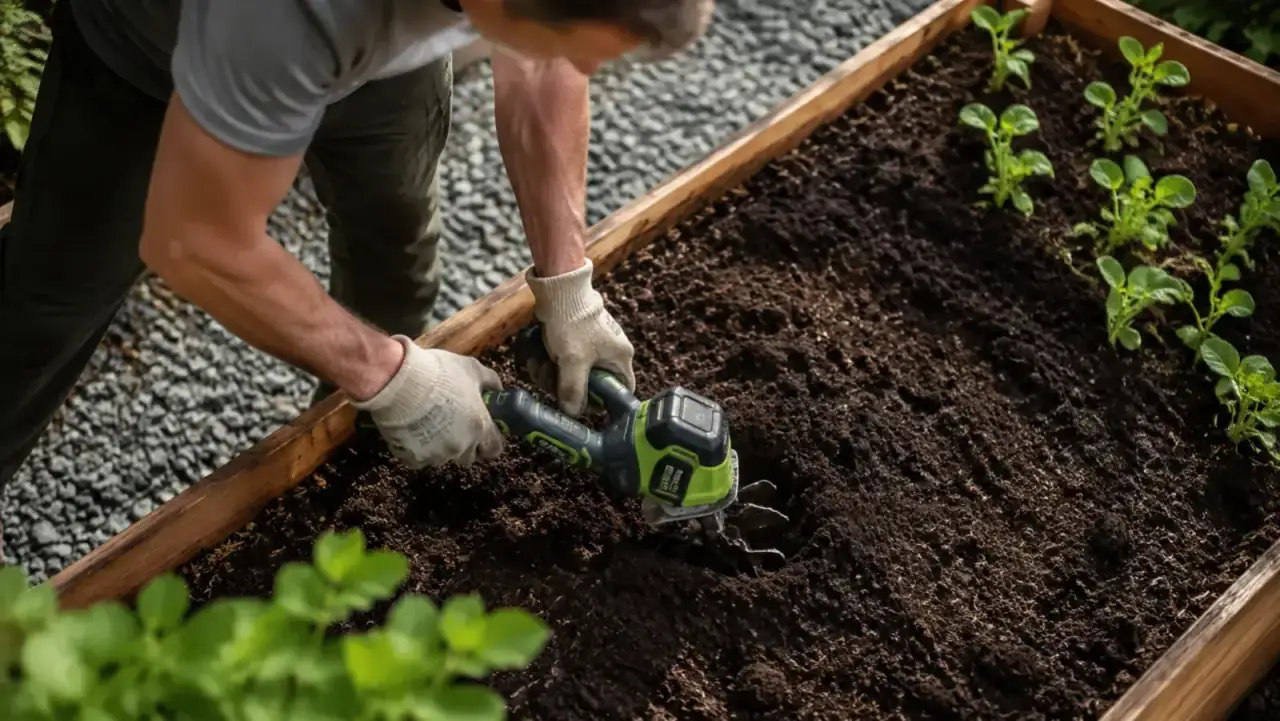
I have turned raised-bed soil by hand for years. A garden fork or a hand cultivator with a short handle, working row by row until my forearms gave out. It gets done, but it takes a while and it takes something out of you. The Alloyman 20V Cordless Tiller Cultivator is the tool that finally convinced me the battery-powered version was worth the cost. Compact enough for a 4x8 raised bed, light enough to handle with one hand when you need to steer around a transplant. Here are ten reasons I think most raised-bed gardeners would get their money back in the first season.
Before I get into the list, a quick note on scope. This is not about acre-scale tillers or gas-powered machines. A raised bed is a contained space, usually 4 to 8 feet long and 18 to 24 inches deep. What you need is precision and control, not raw horsepower. That framing matters for every point below.
Spring prep taking too long? The Alloyman 20V turns a 4x8 bed in about 10 minutes.
Rated 4.5 stars from over 1,200 gardeners. The 360 RPM tine speed handles compacted soil without destroying root structures nearby.
Amazon Check Today's Price on Amazon →It breaks compacted soil without killing your wrists
After a winter of heavy rain or a dry summer with no amendment, raised-bed soil compacts into a slab. Working through that with a hand fork requires real grip strength, and it shows up the next morning in your wrists and forearms. A cordless cultivator runs the tines at 360 RPM and does the mechanical work for you. You guide it, you don't muscle it. If you garden through your fifties and beyond, this difference is not minor. See the <a href="alloyman-cordless-cultivator-review-long-term">full Alloyman season review</a> for notes on how it handled clay-amended soil specifically.
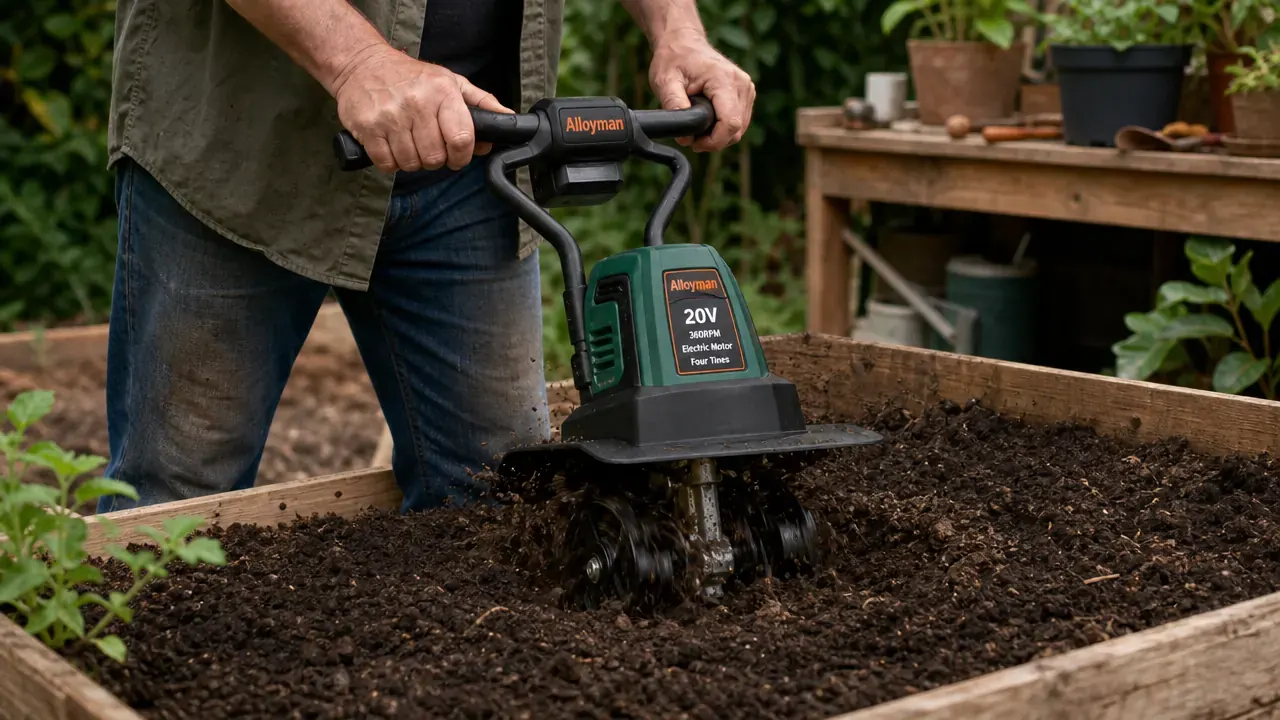
Spring bed prep drops from 45 minutes to about 10
I timed this. Two 4x8 beds, the kind I keep for tomatoes and peppers, used to take me the better part of an hour with a hand fork once I factored in turning, breaking clumps, and working amendments in. With the Alloyman running at full speed, the same two beds take under 20 minutes total, including repositioning. You get more done in a morning and still have energy left for planting.
The compact tine width fits most standard raised bed widths
Big gas tillers are built for open rows. The Alloyman tine spread is narrow enough to work inside a raised bed without slamming the tines into the wooden frame every other pass. You can get close to the edges, which matters because that border zone is where compaction tends to be worst. A hand tool still beats power for the last two inches against the frame, but you cover 90 percent of the bed without switching tools.
No cord to trip over, no gas to store
Corded electric tillers work fine until you start moving around the yard. The cord length defines your radius, and in a backyard with multiple raised beds spread across a lawn, you spend real time managing the line. Gas means fuel storage, oil checks, seasonal maintenance, and a pull cord that sometimes does not cooperate early in the season. The Alloyman runs on a 20V battery. Charge it, pick it up, use it.
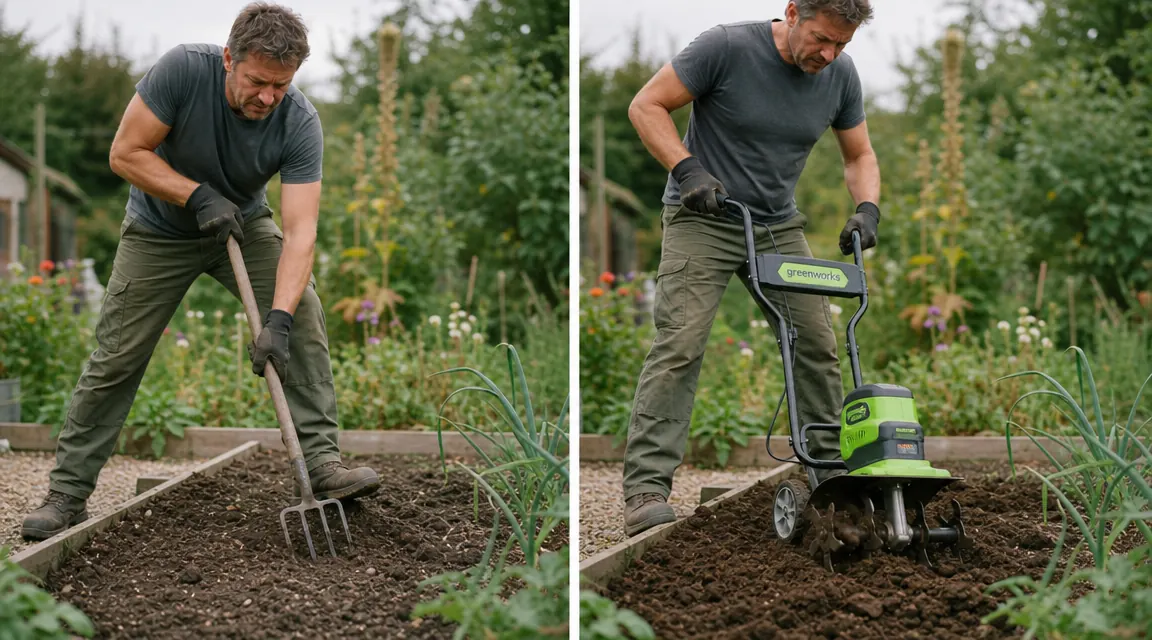
You can work amendments in on the same pass
Adding compost or balanced granular fertilizer to a raised bed and then having to work it in separately is one of those small inefficiencies that adds up over a full season. With a cordless cultivator, you scatter your amendment on the surface, drop the tines in, and the two tasks happen at once. The mechanical churning distributes compost more evenly than a hand fork, and you are not leaving pockets of concentrated fertilizer near root zones.
It handles between-row cultivation without disturbing roots
Mid-season weeding and between-row cultivation is where a cordless tiller earns its keep in ways that spring prep does not fully capture. Running the tines at shallow depth between rows of established plants disrupts weed germination without going deep enough to damage root systems. You need a steady hand and a feel for the depth control, but once you have it, this is faster and more thorough than hand weeding by a wide margin.
Fall bed turnover stops being the chore you skip
A lot of home gardeners do good spring prep and then skip fall turnover because they are tired of the season and the work feels like it does not pay off until next spring. The result is compacted, depleted soil that makes spring prep harder. With a cordless cultivator, fall turnover is quick enough that it actually gets done. Twenty minutes per bed, cover crop or compost turned in, beds put to sleep properly. It changes what you are willing to do.
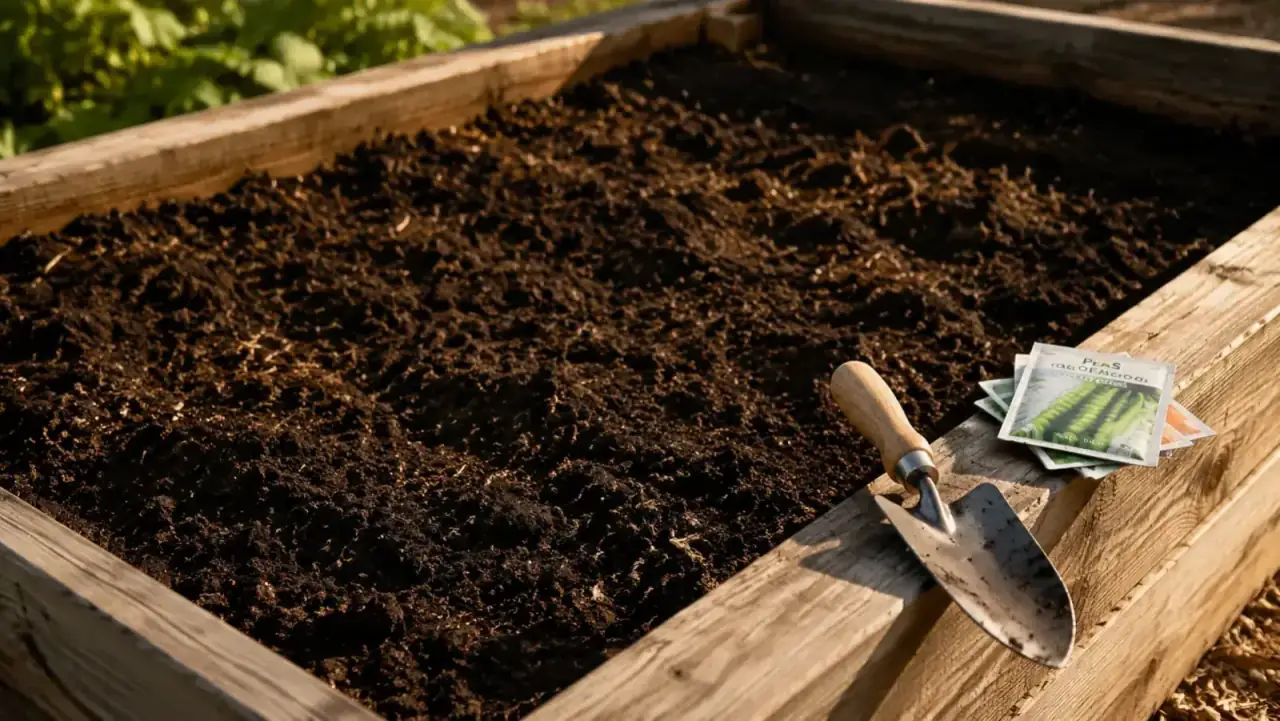
The battery shares with other 20V cordless tools you may already own
If you are already running a 20V cordless string trimmer, leaf blower, or drill, there is a real chance the Alloyman battery is compatible with your existing pack. Fewer dedicated batteries to track, fewer chargers to manage. This is worth checking before you buy, because finding out your existing battery already fits the Alloyman changes the effective cost of entry considerably. The <a href="alloyman-cultivator-vs-manual-tiller">cordless vs manual comparison</a> goes deeper on total cost of ownership.
It weighs under 8 pounds, which matters more than it sounds
Heavy garden power tools lose utility fast because you stop picking them up. A tool that sits in the shed because it is awkward to carry is not a garden tool, it is an expensive storage problem. At under 8 pounds, the Alloyman is light enough that picking it up is not a decision. You see the bed needs turning, you grab it, you go. That casual accessibility is worth more than any spec on the product page.
It is honest about what it cannot do, which makes it reliable for what it can
A cordless cultivator is not a full-size rear-tine tiller. It will not break new ground on a compacted yard, and it will not work through rocky soil with any grace. But for maintained raised beds with established loamy or amended soil, it does exactly what you need it to do, and it does it consistently. Knowing the limits keeps you from being disappointed. The Alloyman's 4.5-star rating across over 1,200 reviews reflects a product that does what it says for the workload it is designed for.
What I Would Skip
If your raised beds are brand new and the soil is still loose and well-structured from the initial fill, you may not feel the benefit of a cordless cultivator right away. New fill soil turns easily by hand, and the tool's value shows up more after one or two seasons of compaction. Also, if you only have one small 4x4 bed and you garden mostly in containers, this is probably not the right investment. The math works best for three or more beds that you are actively planting and maintaining season to season.
The two tasks I hated most in the garden were spring prep and fall turnover. Both of them take under 20 minutes per bed now. That time adds up across a full season.
Ready to stop dreading bed prep? The Alloyman 20V is the tool most raised-bed gardeners wish they had bought a season earlier.
4.5 stars, 1,256 reviews, compact enough for a standard raised bed. Check whether today's price works for your setup.
Amazon Check Today's Price on Amazon →