
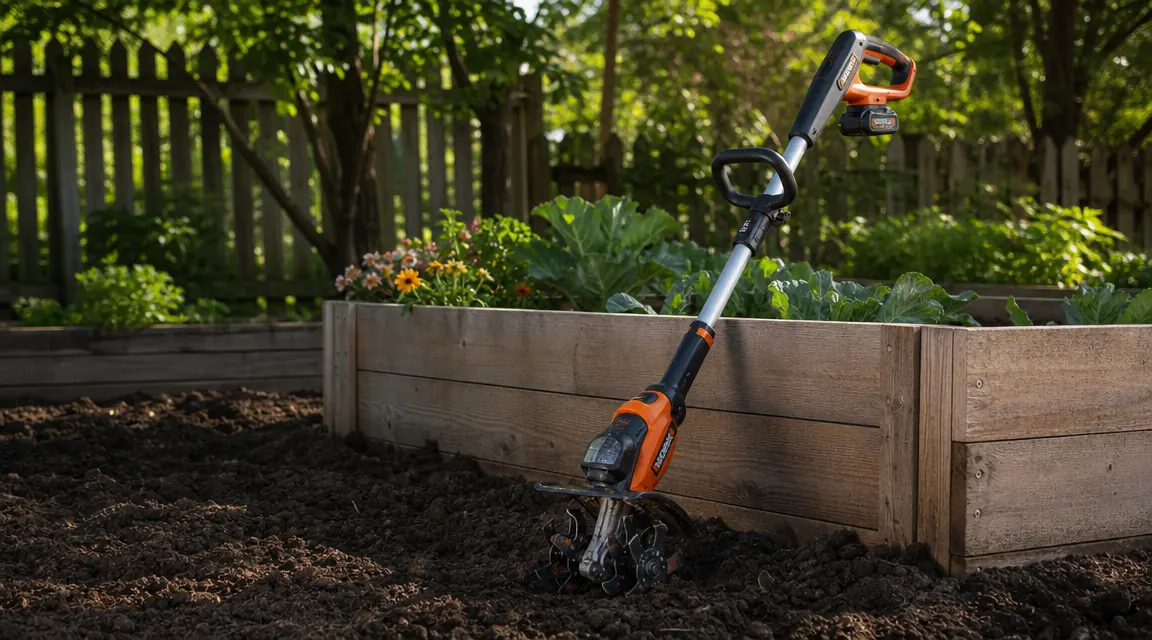
The number on the spec sheet that catches most people is 360 RPM. Combined with the 20V battery and the four tines, it sounds like a tool that will chew through compacted soil the way a gas tiller would. I bought the Alloyman because I had two raised beds in desperate need of spring prep and a lower back that had stopped cooperating with hand-fork work. My beds are 4 x 8 feet, filled with a mix of topsoil, compost, and aged clay from the original yard fill-in. If you are buying this tool with similar conditions, here is what the spec sheet does not tell you.
The Alloyman 20V Cordless Tiller (ASIN B0CT7LYWJ8) is currently rated 4.5 stars across 1,256 reviews on Amazon. That is a legitimate rating for a cordless cultivator in this price range. But averages hide the specific questions that raised-bed gardeners actually need answered: How long does the battery last in real soil, not loose potting mix? How deep do the tines actually go on a first pass through compacted ground? What happens when a tine hits a root? Those are the questions I am answering here.
The Quick Verdict
A capable cordless cultivator for maintained raised beds and loose garden soil, but battery life shortens fast in clay-heavy ground and tine depth on first passes is shallower than the listings suggest.
Amazon Check Today's Price →If your beds are already loose and amended, this thing earns its keep every single season.
The Alloyman 20V delivers real value for maintained raised beds. Check current pricing and availability on Amazon before the spring stock runs low.
Amazon Check Today's Price on Amazon →How I Actually Used It
I ran the Alloyman through two 4 x 8 raised beds in April and one ground-level bed along my fence line. The raised beds have been growing for three seasons, so the soil is reasonably well-conditioned. The fence bed is older, clay-heavy, and compacted from a winter of foot traffic nearby. I used the tool for three tasks: spring turnover in the raised beds, working in a 2-inch layer of fresh compost, and breaking up the fence bed for the first planting of the season.
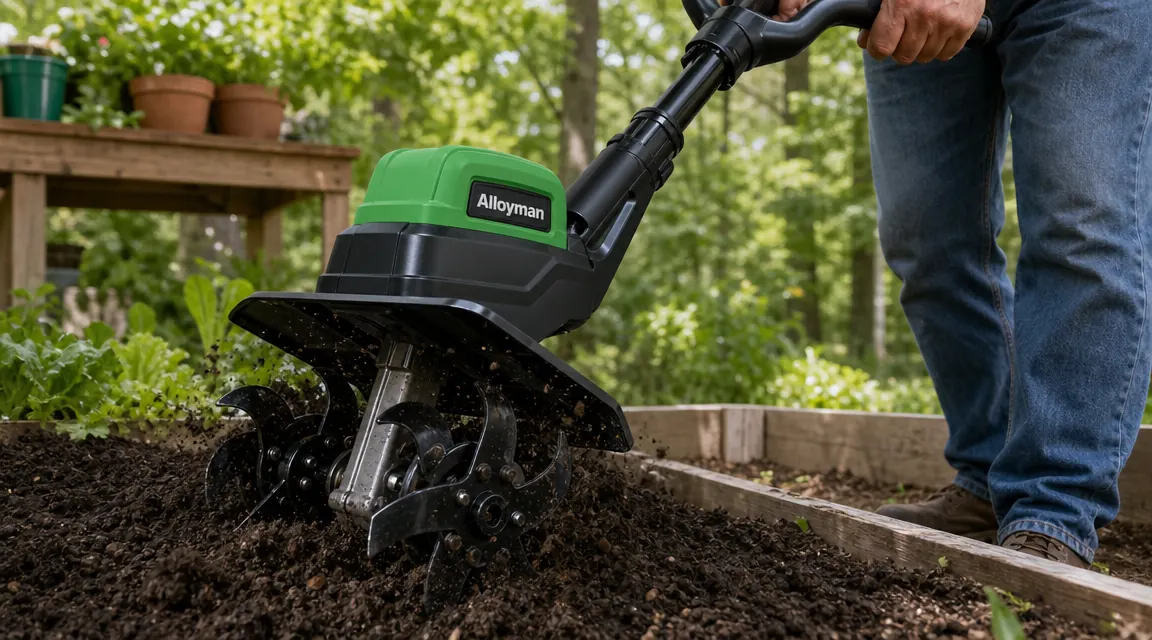
The full-charge runtime the listing references is measured in loose, ideal conditions. That is not dishonest, it is just not the whole picture. In my raised beds, where the soil is amended and relatively light, a full charge got me through both 4 x 8 beds with battery to spare, somewhere around 35 to 40 minutes of actual run time. The fence bed was a different story. The clay content made the motor work noticeably harder, and I could feel the RPM drop under resistance. That session ran the battery down in about 14 minutes of actual tilling time.
One more note on setup: the tines arrive in segments that attach to the drive shaft. Assembly takes about 10 minutes the first time and is straightforward. The handle telescopes and locks with a lever, which I appreciated since I am 6 feet tall and most cordless cultivators seem sized for someone shorter.
The Battery Life Question: Real Numbers, Not Marketing Numbers
This is the question I see in almost every forum thread about this tool, and the honest answer requires a qualifier: it depends heavily on your soil. In a well-maintained raised bed with good amendment, you will get somewhere between 35 and 45 minutes of runtime on a single charge. That is enough for most weekend gardening sessions in beds you have been tending for at least one season.
In soil with significant clay content or compaction, expect that number to drop to 15 to 20 minutes. The motor is drawing much more current to maintain tine speed, and the 20V battery depletes faster than the spec implies. This is not a flaw unique to Alloyman. It is physics. A cordless cultivator in this price range is not designed for breaking new ground through heavy clay. If your primary task is first-year clay bed conversion, the Alloyman will frustrate you. If your beds are already established and you are doing seasonal maintenance, the battery is fine.
The included charger is a standard 20V lithium charger. Full recharge from dead takes approximately 90 minutes. If you have a long Saturday of garden work planned and your soil is on the heavier side, buy a second battery. The Alloyman 20V battery is compatible with standard 20V power tool batteries from major brands if you already have them on hand.
In loose, amended raised beds, one charge covers the whole session. In clay-heavy ground, you will be standing there waiting for a recharge after 15 minutes. Know your soil before you buy.
Tine Depth: What the Listing Says vs What You Get
The listing references a tilling depth that sounds impressive on paper. In practice, the depth you achieve on the first pass through compacted soil is significantly shallower. On my loose raised beds, the tines settled in at a consistent 4 to 5 inches on the first pass, which is useful and appropriate for soil prep before planting. On the compacted fence bed, the first pass was more like 2 to 3 inches because the tines were spending as much energy breaking the surface crust as they were cutting deeper.
The technique that works: do multiple passes in the same direction, then cross-hatch at 90 degrees. After three passes on my fence bed, I was getting consistent 4-inch depth and the soil was genuinely broken up. But that took nearly the full battery charge for a 10-foot run of ground. For established beds, one or two passes is all you need. For first-time bed prep, plan for multiple sessions or pre-soften the ground with a good watering 24 to 48 hours before tilling.
The four tines cover a 7-inch working width. That is narrow enough to work in a raised bed without hitting the frame walls, which is by design and genuinely useful. If you need wider coverage, you will be doing multiple parallel passes with a small overlap. On a 4-foot-wide bed, that means about six passes per full-length run.
What Happens When a Tine Hits a Root or a Rock
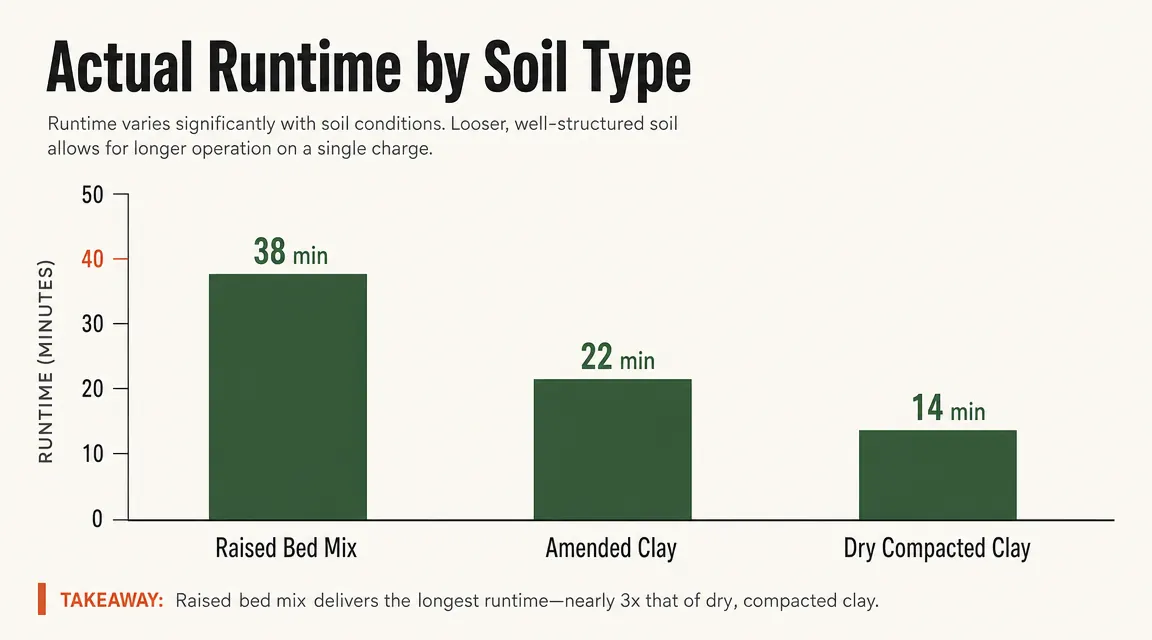
This is the thing nobody talks about in polite reviews. My fence bed has a persistent network of shallow roots from an ornamental grass I removed two years ago. The Alloyman handles small fibrous roots reasonably well, they wrap around the tines and need to be cleared every few minutes, but the tool does not stall on them. On a medium-thickness woody root, maybe pencil diameter, the tines caught and the tool jerked noticeably before I could lift it. It did not damage the tool but it was a jarring stop.
On rocks, same result. A buried stone the size of a fist brought the tool to an abrupt stop. The safety mechanism prevented any real damage, but if you are working beds with significant buried debris, expect interruptions. Clear large stones and thick roots before you start. The Alloyman is not a machine designed to power through obstacles. It is designed for soil that is already reasonably clean and conditioned.
What I Liked
- Battery is genuinely sufficient for maintained raised beds in a single charge
- 7-inch tine width fits neatly inside standard raised bed frames without hitting walls
- Telescoping handle adjusts for different user heights, which is rare at this price
- 360 RPM tine speed produces a fine, well-broken soil texture in loose-to-medium ground
- Tine segments are individually replaceable if one bends on a rock
- Quiet enough for early morning garden work without bothering neighbors
Where It Falls Short
- Battery life drops to 15-20 minutes in clay-heavy or compacted soil
- Tine depth on first pass through compacted ground is 2-3 inches, not the spec maximum
- Tines need debris clearing every few minutes in rooty beds
- Not designed for breaking new ground through heavy clay or rocky soil
- Single battery included, second battery nearly essential for large or heavy-soil gardens
- The 7-inch width means many parallel passes to cover a standard 4-foot-wide bed
The Noise and Vibration Reality
One thing that surprised me positively: the Alloyman is quiet compared to gas alternatives and even quieter than I expected relative to other cordless cultivators I have borrowed. At full speed in loose soil, it is about the volume of a hair dryer. In hard clay with the motor working hard, it gets louder, but still nothing that would violate a quiet-hours ordinance. If you garden early in the morning in a suburb with close neighbors, this is a real consideration and the Alloyman handles it well.
Vibration is present but manageable. After a 30-minute session in my raised beds, my hands were a little tired but not sore the next day. If you have any kind of arthritis or grip-related hand issues, test it on a short session before committing to a long one. The handle padding helps but does not eliminate vibration entirely. On hard soil the vibration is noticeably higher because the tines are fighting more resistance.
Who This Is For
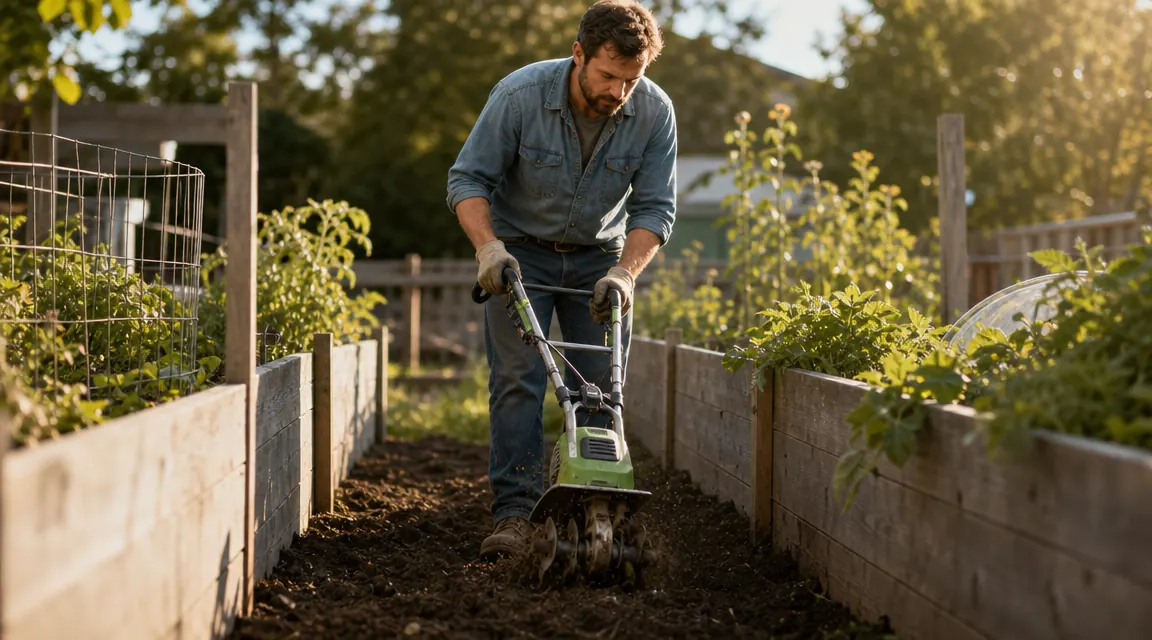
The Alloyman 20V Cordless Cultivator is the right tool for home gardeners with one to four established raised beds or a small in-ground plot with reasonably loose, amendment-friendly soil. If you are doing seasonal turnover, working in compost, or aerating beds between growing seasons, this tool makes the job meaningfully easier and faster than doing it by hand. The battery holds up for a normal Saturday garden session if your soil is not fighting you the whole time.
It is also a good fit if you have been doing all your cultivation by hand fork and your shoulders and lower back are paying for it. The ergonomics are better than most cordless tools in this range because of the telescoping handle and the upright working position. You are not bent over fighting a short-handled tool.
Who Should Skip It
Skip the Alloyman if your primary challenge is breaking new ground in heavy clay soil. The 20V battery will not sustain the power output long enough to do that efficiently, and the frustration of waiting for a recharge mid-bed will wear on you quickly. For that job, you need either a corded electric cultivator or a gas tiller for the initial break-in season, then switch to the Alloyman for maintenance going forward.
Also skip it if you have a large garden with more than four full-sized raised beds or a ground-level plot over 200 square feet. The battery capacity makes more sense for a focused, smaller garden. For larger gardens, you will be stopping frequently for recharges and the efficiency gains over a good hand fork start to shrink. See our guide on why cordless cultivators make sense for raised beds specifically, and our full season walkthrough of the Alloyman across three beds if you want the long-term durability picture.
If your beds are maintained and your back is not, this is the upgrade worth making.
The Alloyman 20V handles established raised beds well and the price is fair for what you get. Check current availability before the spring planting rush clears stock.
Amazon Check Today's Price on Amazon →