

I have a lilac at the back of my yard that I let get away from me. Three seasons of neglect turned it into a tangle of dead wood and suckers, with the thickest stems running close to 1.5 inches in diameter. Last spring I finally committed to reclaiming it, and the tool I reached for was the TABOR TOOLS GG21A Extendable Bypass Lopper. I spent the better part of last season running that lopper through the lilac, through the apple tree suckers along the fence, through a wisteria that had decided to eat my pergola, and through a dozen other cleanup jobs around a third-acre suburban lot. What follows is the real report.
The short version: the GG21A earned its place in my tool shed. The compound action and telescoping handles make it genuinely useful on cuts I would have struggled with on a fixed-length lopper. There are a couple of honest limitations worth knowing before you buy, but for the home gardener dealing with anything up to 2-inch diameter branches, this is a well-built tool at a fair price.
The Quick Verdict
A compound-action telescoping lopper that earns its keep on thick shrubs and young trees, with honest tradeoffs around weight and blade longevity on very hard wood.
Amazon Check Today's Price →If you have got branches over 3/4 inch that keep beating your hand pruner, this is the fix.
The GG21A handles cuts up to 2 inches with compound-action leverage. Check the current price on Amazon and see if it is in stock.
Amazon Check Today's Price on Amazon →How I Have Used It
My test conditions were not gentle. The lilac alone gave me over three hours of cutting spread across four sessions from late March through early May. The oldest canes were hard and slightly woody-dry from winter, and I was cutting at awkward angles because the shrub is backed into a corner. I also used the GG21A on apple tree water sprouts along a six-foot fence line, on wisteria canes ranging from pencil-width to a full inch, on overgrown forsythia, and on the lower limbs of a young serviceberry I was training. Total cutting time over the season was somewhere north of eight hours.
I kept notes on blade sharpness, handle rattle, locking mechanism wear, and whether the compound action stayed smooth over time. I also paid attention to hand fatigue because I have some mild arthritis in my left hand and a sore wrist is a real problem for me mid-season. The GG21A is not a featherweight at around 2.4 lbs, but the compound action means I was squeezing less hard per cut than I would have with a single-pivot lopper of the same blade size.
A note on what I did not test: I did not try to push it to the 2-inch limit on fully mature hardwood. I stayed under 1.5 inches on the hardest material. My experience is that advertised cutting capacities on loppers are almost always measured on soft green wood. Budget for roughly 80 percent of the rated capacity when you are cutting aged, dry material.
The Telescoping Handles: Genuinely Useful, Not Just a Marketing Feature
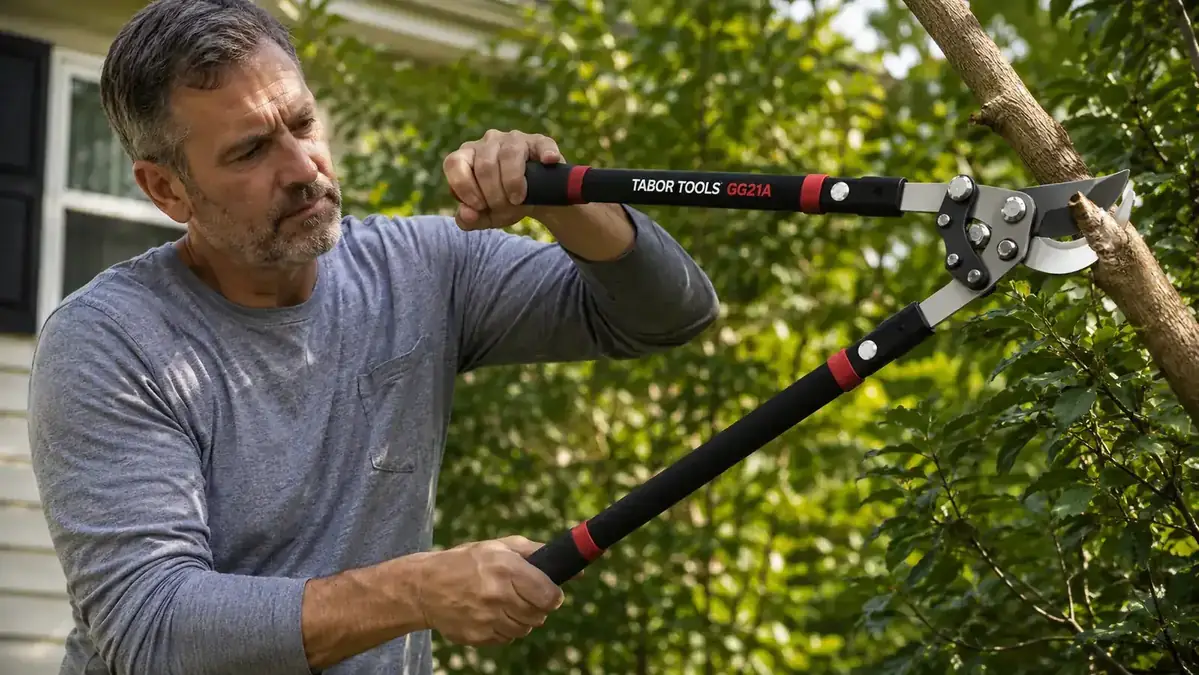
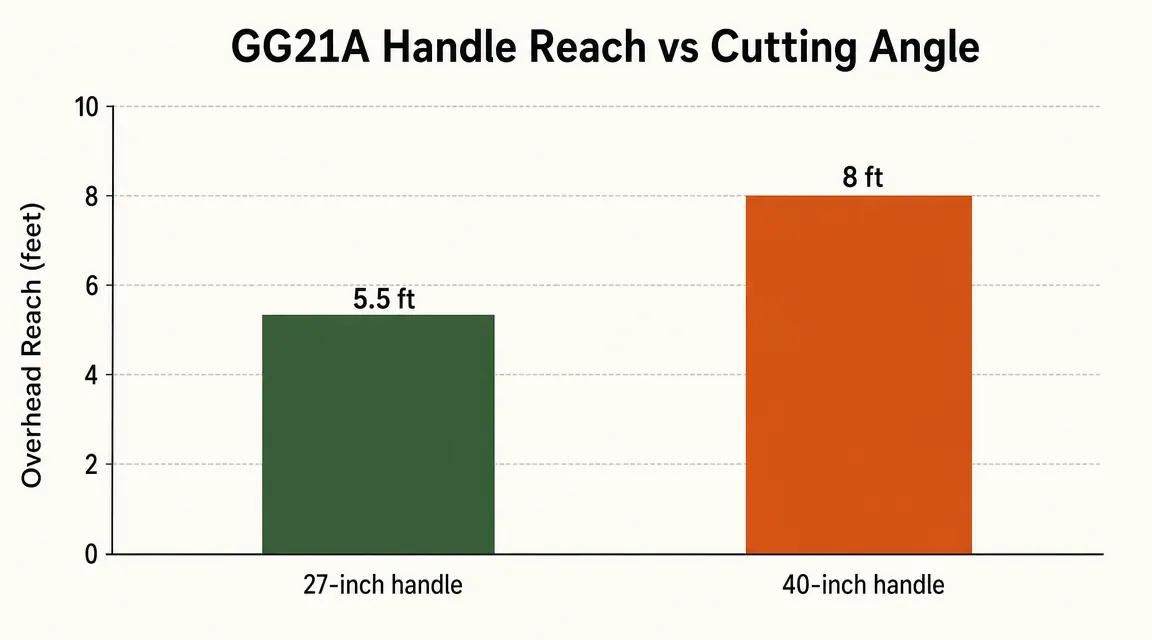
The GG21A extends from 27 inches to 40 inches. I was skeptical before I used it. On most adjustable tools, the adjustment mechanism is the weak point, either sloppy right out of the box or loose after a few sessions. The GG21A uses an aluminum alloy sleeve with a twist-lock collar. After a full season, that collar still locks tight. I did notice that the lock takes two firm turns to seat properly. One turn feels locked but is not quite, and the handle will slowly creep during a hard cut. Two turns and it stays put. That is a quirk you learn fast, but worth knowing.
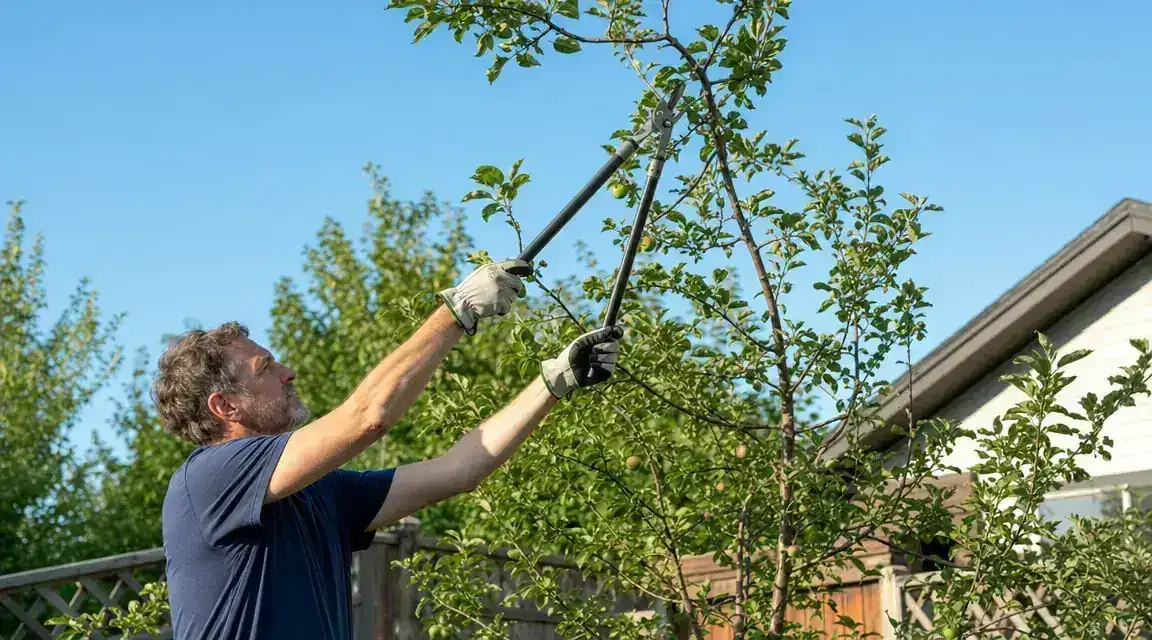
The reach advantage is real for the specific situations it was designed for. Cutting limbs that are above shoulder height without a ladder, working deep into the interior of a wide shrub without stepping inside the plant, and cutting along a fence where a shorter lopper would force an awkward body position. All three situations came up regularly for me last season. At 40 inches I was able to trim a serviceberry branch that was about eight feet off the ground without leaving the ground. At 27 inches the lopper is compact enough to maneuver inside the lilac canopy. Being able to dial in the handle length for the task at hand is genuinely useful, not just a selling point.
Compound Action: What It Means in Practice
Compound action means the handles and blades are connected through a secondary pivot that multiplies the mechanical advantage of your squeeze. On the GG21A the result is tangible on cuts above 3/4 inch. On a single-pivot lopper of comparable blade size I would start to feel resistance at about 1 inch and strain noticeably at 1.25 inches. With the GG21A the 1-inch cuts felt easy and 1.5-inch cuts required real effort but were manageable in one or two squeezes. That matters a lot if you are working for an extended session, or if hand strength is a limitation.
The tradeoff with compound action is that the mechanism adds weight and complexity. The secondary pivot point has a small amount of play after heavy use, which creates a faint metallic click on the return stroke. It does not affect cutting performance, but it is there and you will notice it after a few months of regular use. Whether that bothers you is a personal call. My test lopper is still cutting cleanly with that click present.
On 1-inch lilac canes the compound action let me work for 90 minutes without the hand fatigue I usually get by the hour mark on a standard lopper.
The Blades: SK-5 Steel, Bypass Design, Honest Durability Report
The GG21A uses SK-5 high-carbon steel blades in a bypass configuration. SK-5 is a solid mid-range blade steel. It holds an edge longer than the generic carbon steel you find on budget loppers, but it is not in the same category as the Swedish steel Felco uses on their hand pruners. For a lopper in this price range it is appropriate. The bypass design means the blades pass each other like scissors rather than meeting on an anvil, which produces a cleaner cut with less stem crush.
After a full season I have not resharpened the blades. They are no longer as sharp as they were out of the box, but they are still making clean cuts on green wood. On dry hardwood like the older lilac canes, they start to show their age slightly, with a slight tearing quality on the cut face rather than the clean shear I saw early in the season. A sharpening stone will fix that. The blades are replaceable, which matters for the long-term cost picture. You do not have to buy a new lopper when the blades dull.
One maintenance note: the GG21A does not come with any blade lubricant. On a wet season the pivot and blade contact point will start to collect sap and debris. I clean mine with a rag and a bit of WD-40 after every few sessions. Without that, sap buildup will start to drag on the blade action within a few weeks of heavy use.
Handles, Grips, and Actual Ergonomics
The handles are aluminum with rubber-cushioned grip sections. The rubber is firm rather than squishy, which I actually prefer for sustained cutting because a very soft grip compresses too much and transmits vibration differently. The cushioning does its job on the shock of a cut completing through a hard branch. My left hand (the one with arthritis) did not bother me after a 90-minute session, which is better than I expected.
At 2.4 lbs the GG21A is not a lightweight. Extended overhead cutting, with the handles at 40 inches and your arms above your head, gets tiring faster than ground-level work. This is not unique to the GG21A; it is the physics of a two-pound object on the end of a 40-inch lever. If most of your cutting is overhead, build in short breaks. If most of your cutting is at or below shoulder height, the weight is not an issue.
What I Liked
- Compound action noticeably reduces squeeze effort on cuts above 3/4 inch
- Telescoping handles from 27 to 40 inches give real reach and maneuverability options
- Twist-lock collar stays tight after a full season of use
- SK-5 bypass blades make clean cuts and are replaceable
- Rubber-cushioned handles reduce fatigue during extended sessions
- 11,546 Amazon reviews averaging 4.8 stars backs up the general durability picture
Where It Falls Short
- At 2.4 lbs it gets heavy during extended overhead cutting
- Compound action pivot develops a faint click after heavy use
- Twist-lock requires a full two turns to seat properly; one turn is not enough
- Blades need cleaning and lubricating regularly to prevent sap drag
- Cutting capacity of 2 inches is realistic only on soft, green-wood material
How It Compares to Fixed-Length Loppers I Have Owned
Before the GG21A I used a basic 30-inch bypass lopper I picked up at a big-box store for budget pricing. That lopper had one fixed length, a single pivot, and blades that needed sharpening by mid-season. The GG21A is a different class of tool. The compound action alone makes the comparison unfair on thick material. But the telescoping length is the feature I did not know I wanted until I had it. Fixed-length loppers force you to work around the tool instead of with it. The GG21A lets you set the handle length to what the job requires.
If you are considering the Fiskars 32-inch bypass lopper as an alternative, the main difference is the telescoping feature and the compound action. The Fiskars has a lighter overall feel and a slightly more aggressive blade angle that some people prefer for green wood. The GG21A wins on reach and on thick hardwood cuts. For a detailed side-by-side, see the comparison at TABOR TOOLS GG21A vs Fiskars Lopper.
Who This Is For
The GG21A is the right lopper if you have established shrubs or young trees in a suburban yard and you are doing real maintenance cuts rather than light grooming. Specifically: if you are cutting back hydrangeas to the ground each spring, clearing old wood out of lilacs or forsythia, removing water sprouts from fruit trees, or managing a wisteria or similar vigorous woody climber. It is also a good fit if you are reaching into tight spaces or cutting at height without wanting to drag out a ladder for routine work. If you are cutting branches over 1.5 inches regularly, you need a saw, not a lopper. But for everything under that threshold on a suburban property, the GG21A covers the range well.
The compound action specifically helps if hand strength or endurance is a limiting factor. Gardeners with arthritis, anyone coming back from a wrist or shoulder issue, and anyone who works for two or three hours at a time rather than 20-minute sessions will feel the difference. The extendable handles help anyone who is shorter than average or who does not want the physical strain of reaching overhead with a standard-length lopper.
Who Should Skip It
If your garden is mostly annual beds and container plantings, and the heaviest cut you make all season is a leggy salvia stem, the GG21A is overkill. A good pair of bypass hand pruners handles everything under 3/4 inch more nimbly and with less fatigue than any lopper. Save your money for other tools. If you are also considering a lopper for very light, decorative trimming of ornamental grasses or perennial stems, a lightweight fixed lopper at half the price will serve you fine.
If you routinely cut mature hardwood branches over 1.5 inches in diameter, a lopper is not your primary tool regardless of brand. A folding pruning saw will do that work faster, with a cleaner cut, and with less blade wear. The GG21A is excellent for what loppers are actually designed to do. Just be clear-eyed about where loppers end and saws begin. For more on what the extendable design gets right for home gardeners, see 10 Reasons an Extendable Lopper Is Worth the Upgrade.
One full season later, the GG21A is still the lopper I reach for first.
The compound action, telescoping handles, and replaceable SK-5 bypass blades make it the most capable lopper I have owned at this price point. Check today's price on Amazon.
Amazon Check Today's Price on Amazon →