

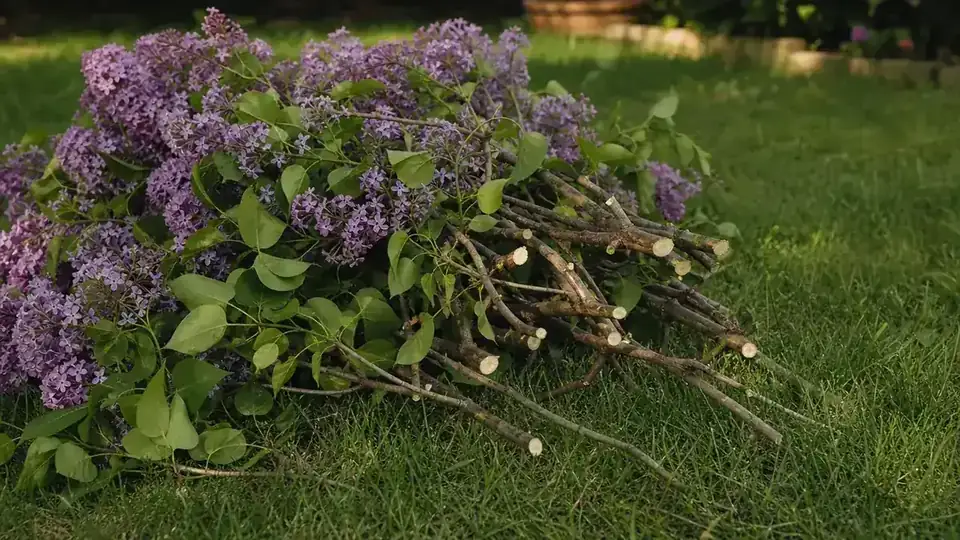
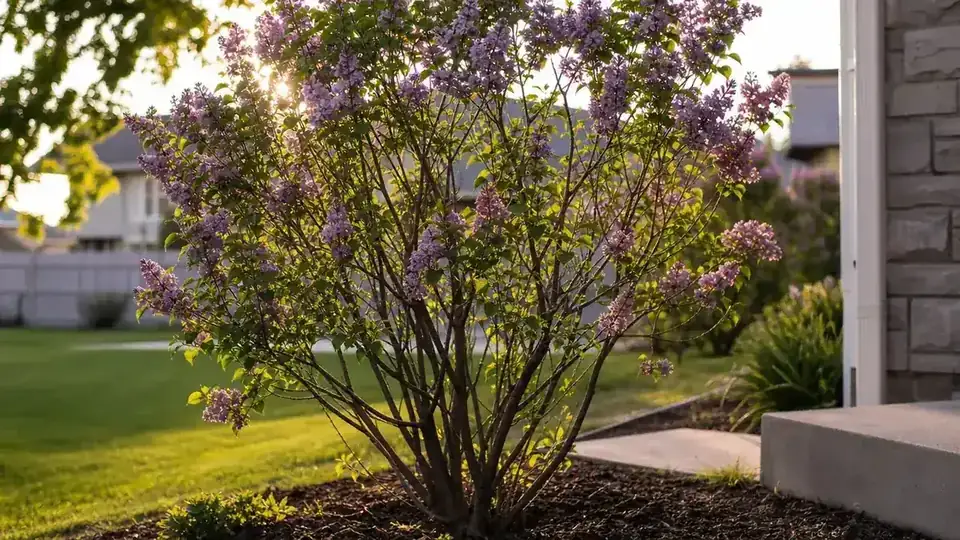
There is a lilac at the far corner of my yard that I have been embarrassed about for three years. Not neglected exactly. I had tried to deal with it every spring. I just never made any real progress. The shrub is maybe eight feet across and the center is a tangle of crossing branches, some of them close to two inches thick, growing at every angle. The kind of situation where standing back and looking at it just makes you tired.
My first attempt was with a pair of cheapish bypass loppers I had bought at a hardware store on impulse. They had a listed cutting capacity of one and a half inches, which sounded like enough. They weren't. On anything over an inch, I was fighting them. On the real problem branches, I gave up and just cut what I could reach easily. That lilac ended up 30 percent tidier and 70 percent the same disaster.
The second spring I borrowed my neighbor's lopper. Older, fixed-length, nothing special. His yard has some nice fruit trees so I assumed his tools were decent. Same result. The reach wasn't there for the deep interior cuts, and on thick branches I was torquing the handles sideways just to get through. I got a blister. The lilac won again.
By the third year I had started to wonder if the problem was me. Maybe I was just not strong enough. Maybe I needed to rent a tool or hire someone out. My wife suggested I look at what the tool actually was before blaming myself. She has a point. I started doing some real research instead of grabbing whatever was on the shelf.
The compound action on this thing is not marketing language. You can feel the mechanical advantage the moment you close the handles on a thick branch.
What I learned pretty quickly is that there is a meaningful difference between a lopper with compound action and one without it. Compound action means the blade mechanism multiplies your cutting force through a secondary pivot, so you are not just squeezing two pieces of steel together by brute strength. On branches in the one-and-a-half to two-inch range, the difference is substantial. I also learned that the reach matters more than I had thought, because the problem with my lilac wasn't just thickness. It was getting to the branches buried deep in the center without straining my shoulders. A fixed 28-inch lopper wasn't getting there.
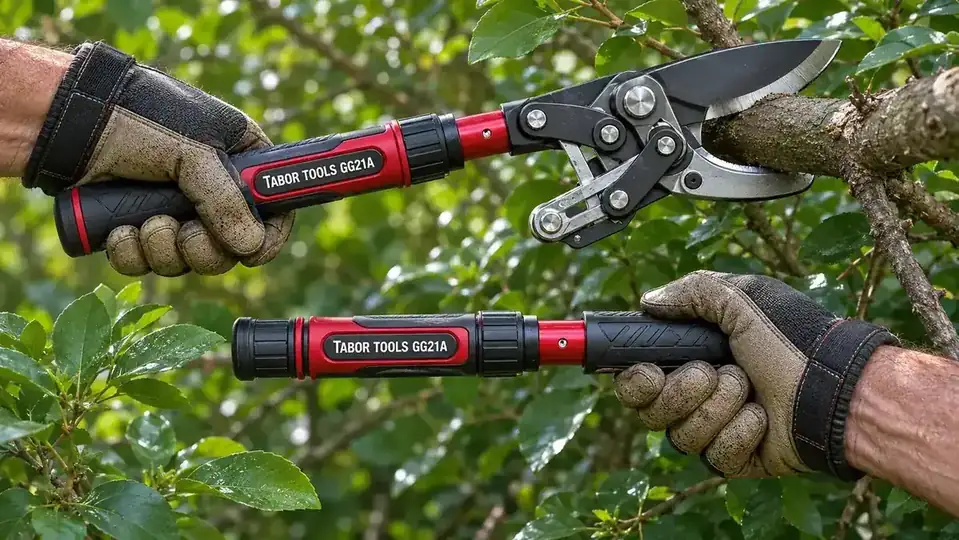
I ended up ordering the TABOR TOOLS GG21A. It's an extendable bypass lopper with compound action and a handle that telescopes from 27 inches out to 40 inches. Rated for two-inch branches. When it arrived I took it out to the lilac the same afternoon, mostly just to see. I'm glad I didn't wait for a weekend project day, because I ended up spending two hours out there and clearing more than I had in two full spring sessions combined.
If your shrubs have been winning the argument, this is the lopper that changes the math.
The TABOR TOOLS GG21A has compound action for thick branches and a telescoping handle that gets you into the spots you've been giving up on. Over 11,500 reviewers on Amazon agree it's worth what it costs.
Amazon Check Today's Price on Amazon →The compound action on this thing is not marketing language. You can feel the mechanical advantage the moment you close the handles on a thick branch. The cut doesn't fight back the way it did with the older loppers. I got through a branch I measured afterward at 1.8 inches on the first clean attempt. No rocking, no second pass. That branch had stopped me cold the year before.
The telescoping handle solved the reach problem in a way I hadn't fully expected. When I was working the outer growth, I ran it at 27 inches for control. When I needed to get into the middle of the shrub, I extended it to somewhere around 35 inches and suddenly I had angles I had never been able to reach. The center of that lilac has a whole section that hasn't been cut back properly in probably a decade. I got to it. The difference in how the shrub looks now versus two hours earlier is honestly a little embarrassing. It was just the right tool the whole time.
The blades are bypass design, which matters on living wood. Clean cuts heal faster and you're not crushing the branch tissue the way anvil loppers do. I had let this get overgrown enough that I was leaving some major stubs, but every cut that mattered came out cleanly. I cleaned the blades with a rag when I was done, and they looked fine. The construction feels solid, nothing rattling around in the compound mechanism.
What I'd Tell You If We Were Sitting at My Kitchen Table
Here is the honest version: if you have been going out to your yard year after year and making partial progress on a shrub or a young tree that needs serious attention, the problem is almost certainly the tool. I spent two springs feeling like I just wasn't working hard enough. What I was actually doing was asking a cheap fixed-length lopper to do work it was never designed for.
The TABOR TOOLS GG21A costs more than the hardware store impulse buy. It's worth it. The compound action means you're not fighting your own equipment on every cut. The telescoping handle means you can reach what actually needs cutting, not just the easy outer stuff. For lilacs, overgrown forsythia, apple tree suckers, wisteria that got away from you, anything with branches in the one-and-a-half to two-inch range, this is the tool I would hand you from my shed without hesitation. Just buy the right lopper once and stop apologizing to yourself every spring.
If you want more detail before buying, I've written a full piece on what the GG21A handles well and where it falls short at my complete honest review. And if you are not sure whether you even need the extendable design, the breakdown at 10 reasons an extendable lopper is worth the upgrade lays it out plainly.
Three years of the same shrub winning. Don't let that be you next spring.
The TABOR TOOLS GG21A Extendable Bypass Lopper has compound action for 2-inch branches and telescopes from 27 to 40 inches so you actually reach the cuts that matter. Rated 4.8 stars by more than 11,500 Amazon buyers.
Amazon Check Today's Price on Amazon →