
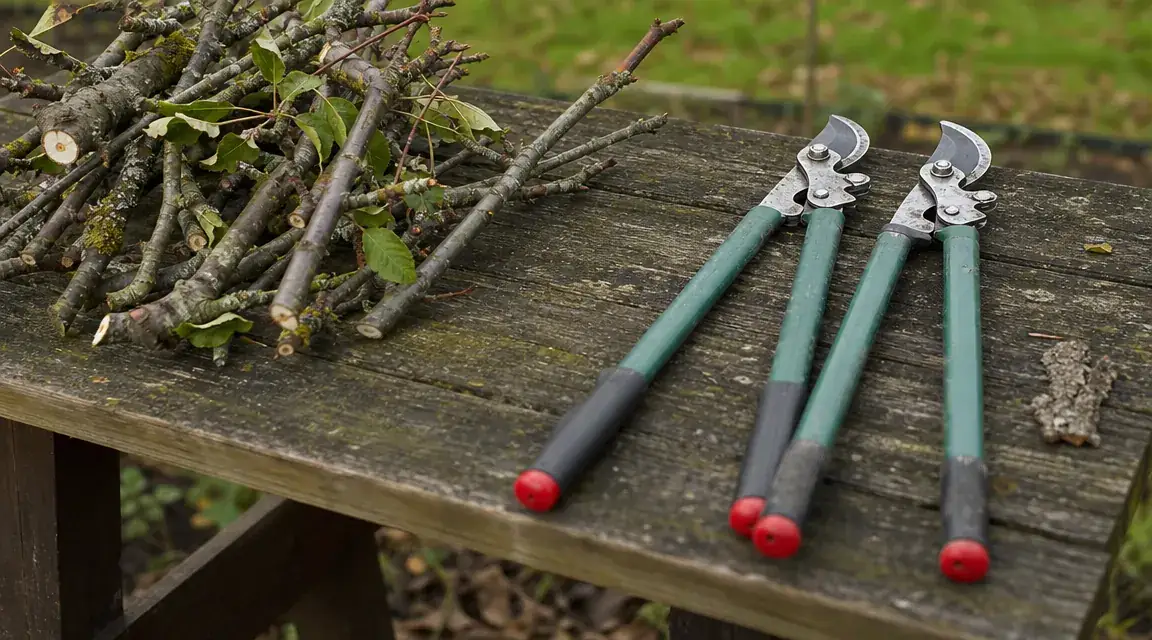
If you are shopping for a bypass lopper and you have narrowed it down to the TABOR TOOLS GG21A and the Fiskars 32-inch, you are in roughly the same spot I was two years ago. Both have thousands of positive reviews, both cut branches up to 2 inches in diameter, and both are priced well below the professional-grade tools. The question is which one actually performs when you are standing in front of a lilac that has been let go for three years or an overgrown apple tree sending up suckers from every direction.
I have used both tools on the same property over two seasons. The short answer: the TABOR TOOLS GG21A wins on reach and leverage, while the Fiskars 32-inch is lighter and a better pick for someone who does most of their lopping at chest height on smaller-diameter material. The longer answer follows.
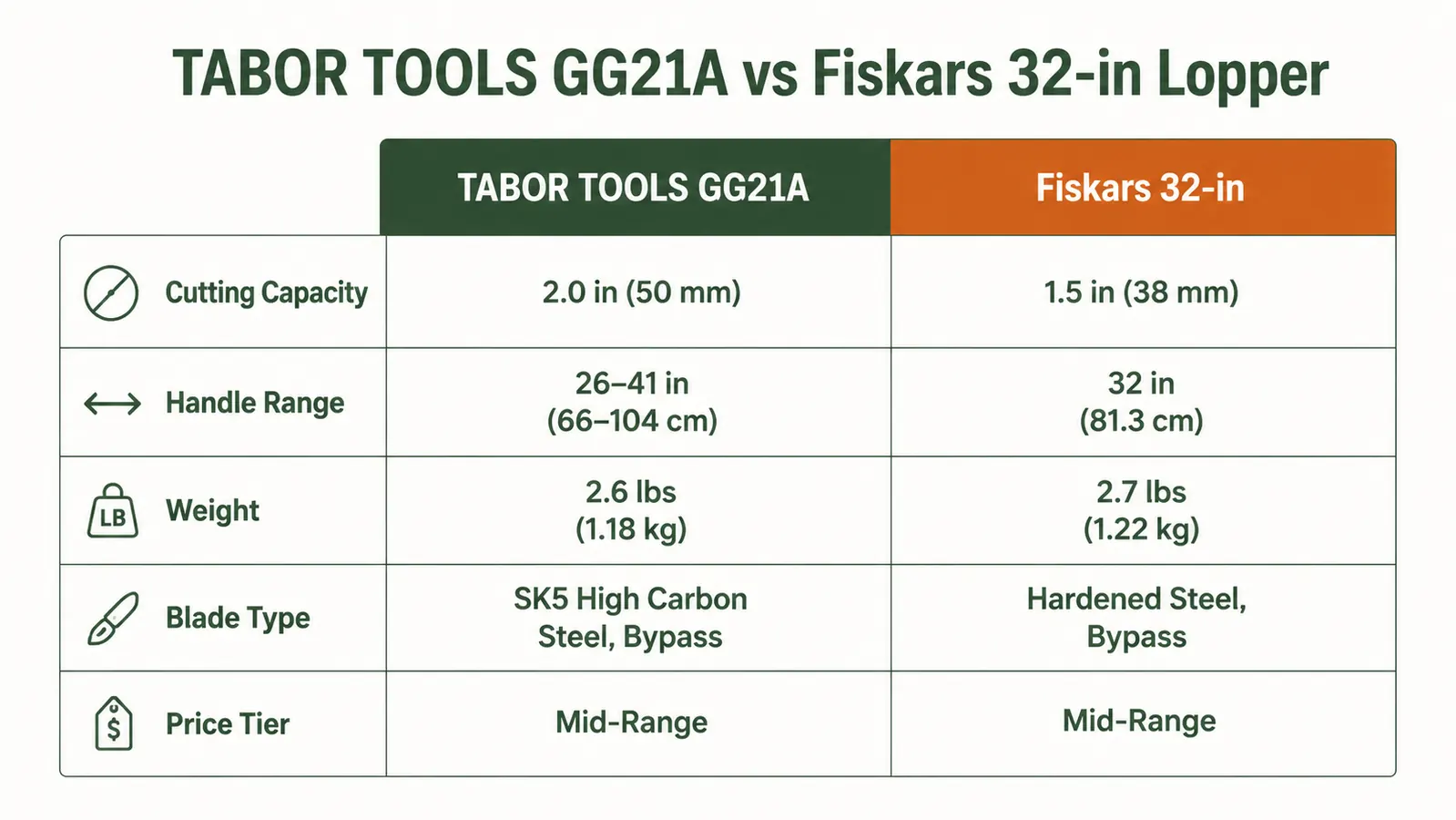
| TABOR TOOLS GG21A | Fiskars 32-Inch Lopper | |
|---|---|---|
| Handle Length | 27-40 inches (telescoping) | 32 inches (fixed) |
| Cutting Capacity | Up to 2 inches diameter | Up to 1.75 inches diameter |
| Blade Type | Bypass (SK5 high-carbon steel) | Bypass (hardened steel) |
| Mechanism | Compound action (3x leverage) | Single-action |
| Weight | Approx. 2.6 lbs | Approx. 1.9 lbs |
| Reach Overhead | Up to ~8 ft extended | Approx. 6.5 ft |
| Blade Replacement | Yes, replaceable blade | No, tool is replaced |
| Handle Material | Aluminum alloy tube | Powerstep fiberglass |
| Price Tier | Mid-range | Budget to mid-range |
Where the TABOR TOOLS GG21A Wins
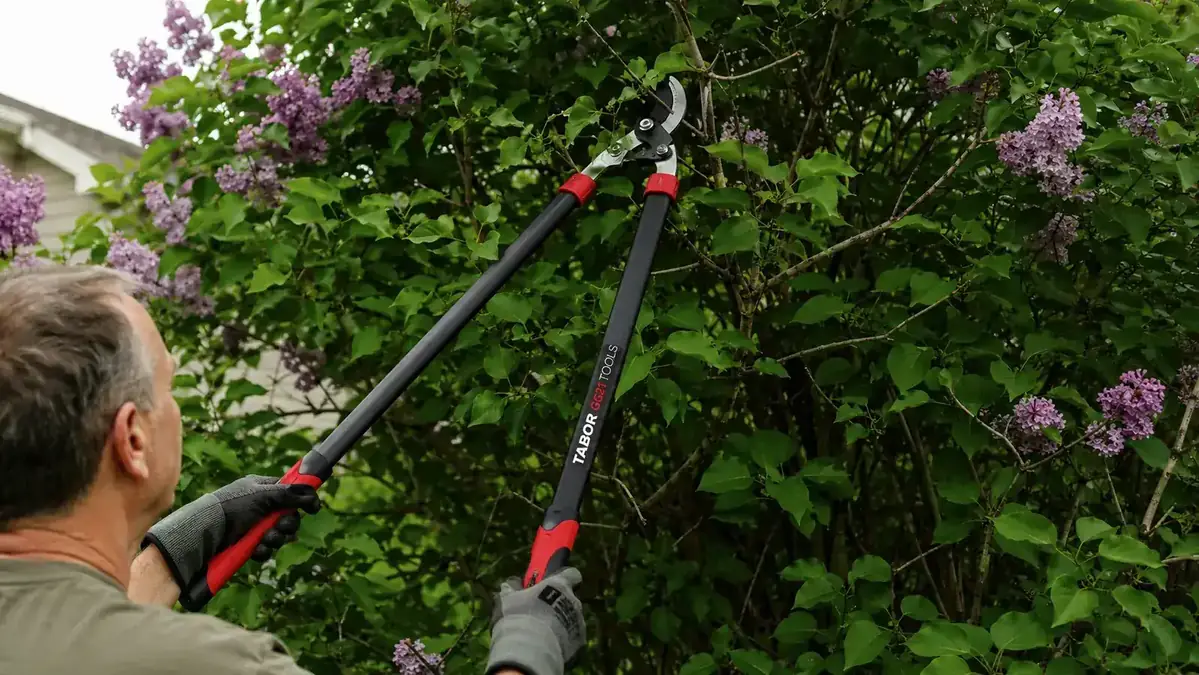
The biggest practical difference is the telescoping handle. The GG21A extends from 27 inches to 40 inches, which gives you roughly 18 months of useful reach overhead that the Fiskars simply cannot match at a fixed 32 inches. On my property, I have a mock orange that gets taller than I can comfortably manage at 5'9". With the GG21A fully extended, I can cut branches that are close to 8 feet off the ground without a step stool. That matters when you are trying to keep the top of a shrub balanced without setting up a ladder every third cut.
The compound action mechanism is the second genuine advantage. On branches between 1.5 and 2 inches, I can feel the difference. The Fiskars requires noticeably more grip strength on thicker material; by the tenth cut on a wisteria trunk that had been growing unchecked, my forearms felt it. The GG21A's compound action multiplies the force so the same cut takes less hand effort. For anyone with grip fatigue, arthritis, or just a longer session ahead, this is real. The SK5 high-carbon steel blade also holds its edge longer than I expected. After one full season I sharpened it once. The Fiskars blade, by contrast, had gone noticeably dull by midsummer.
Where the Fiskars Wins
Weight is the Fiskars' real argument. At roughly 1.9 lbs versus the GG21A's 2.6 lbs, it is noticeably lighter over a long session. If you are doing most of your lopping at standard height, say, cutting back roses or hydrangeas at shoulder level or below, the Fiskars' Powerstep fiberglass handles feel lively in the hand. The lighter swing reduces fatigue when you have a lot of cuts to make and none of them require extended reach.
The Fiskars is also less expensive, often significantly so depending on the retailer. If you genuinely only cut at standard height and your material rarely exceeds 1.5 inches, the Fiskars is a decent tool for the money. The blade is sharp out of the box, the grip is comfortable, and it handles deadheading and light limb work without complaint. The durability concern comes when you push it to the top of its claimed cutting range. The GG21A handles 2-inch branches with confidence; the Fiskars at 1.75 inches starts to feel like you are asking too much of it.
If your branches are thick and your shrubs are tall, the GG21A is the lopper that won't make you regret the upgrade.
The TABOR TOOLS GG21A has a 4.8-star rating from more than 11,500 buyers. Compound action, telescoping reach, and a replaceable SK5 blade. Check the current price on Amazon.
Amazon Check Today's Price on Amazon →Cutting Performance on Real Material
I ran both tools through the same session on three types of material: fresh lilac stems from this season (easy, green wood, 0.5-1 inch), two-year-old wisteria runners (woody, fibrous, around 1.25 inches), and old apple tree suckers (hardwood, dry, close to 1.75 inches). On the lilac and wisteria, both loppers were fine. The cuts were clean, neither blade bound up, and fatigue was not an issue at that diameter range.
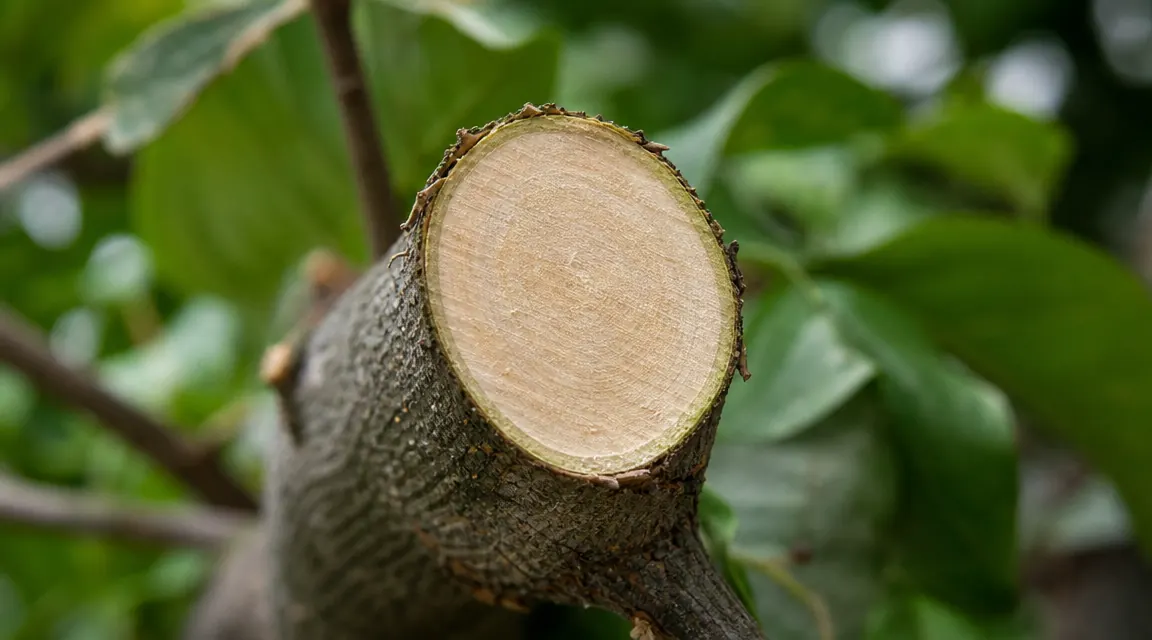
On the apple suckers, the difference showed up immediately. The GG21A went through in one or two controlled squeezes. The Fiskars got through but required more repositioning, more effort, and left a slightly ragged edge on two of the harder cuts. For everyday suburban maintenance, that distinction might not matter to you. For anyone dealing with mature hardwood or consistently thick material, it matters a lot. A ragged cut heals more slowly, leaves more surface area exposed to disease, and is harder on the tree. Clean cuts are not just aesthetic.
On apple tree suckers close to 1.75 inches, the Fiskars got through but required more effort and left a slightly ragged edge. The GG21A went through in one or two controlled squeezes.
Durability and Long-Term Value
The TABOR TOOLS GG21A has a replaceable blade, which changes the long-term math. When the blade eventually dulls beyond sharpening, you buy a new blade, not a new tool. The Fiskars does not offer blade replacement; the tool is the blade, so when one goes, both go. Over two or three seasons, that replacement cost adds up for someone who uses their lopper regularly. The GG21A's aluminum alloy handles also resist rust better than cheaper steel tube handles. I left mine out in a May thunderstorm and found no corrosion when I picked it up the next morning.
The telescoping mechanism is where some buyers have raised durability questions online. The locking collar needs to be seated firmly or it will slip under load. I had that happen once in the first week before I understood the tool. Since then, no issues. It is worth reading the locking instructions before the first use and making sure it clicks fully before putting pressure on it. That is a one-time learning curve, not an ongoing problem.
Who Should Buy Which
Buy the TABOR TOOLS GG21A if you have shrubs or trees that grow taller than chest height, if you regularly cut branches thicker than 1.25 inches, or if you want a tool that you can maintain and sharpen rather than eventually replace. The compound action is a genuine benefit for anyone who does extended sessions, and the telescoping handle opens up cuts you cannot make at all with a fixed-length lopper. At a 4.8-star rating from over 11,500 buyers, the performance reputation is well-established.
Buy the Fiskars 32-inch if your lopping work is mostly at standard height, your material is consistently under 1.5 inches, and you want the lightest possible tool for short sessions. It is a capable lopper within those parameters and costs less. Just know going in that it is a fixed-reach, single-action tool, and that its cutting capacity ceiling is real.
For more detail on how the GG21A performs over a full season of heavy use, including the thick wisteria session and a breakdown of how the blade held up, see my long-term TABOR TOOLS GG21A review. If you want the less-covered side of this tool, the quirks and what buyers tend to discover after a few months, the honest review covers that in full.
The GG21A is the lopper I would buy again knowing what I know now. The telescoping reach and compound action together are a combination the Fiskars cannot match.
TABOR TOOLS GG21A: 4.8 stars, 11,500+ reviews, telescoping 27-40 inch handles, compound action, replaceable SK5 blade. See current pricing and availability on Amazon.
Amazon Check Today's Price on Amazon →